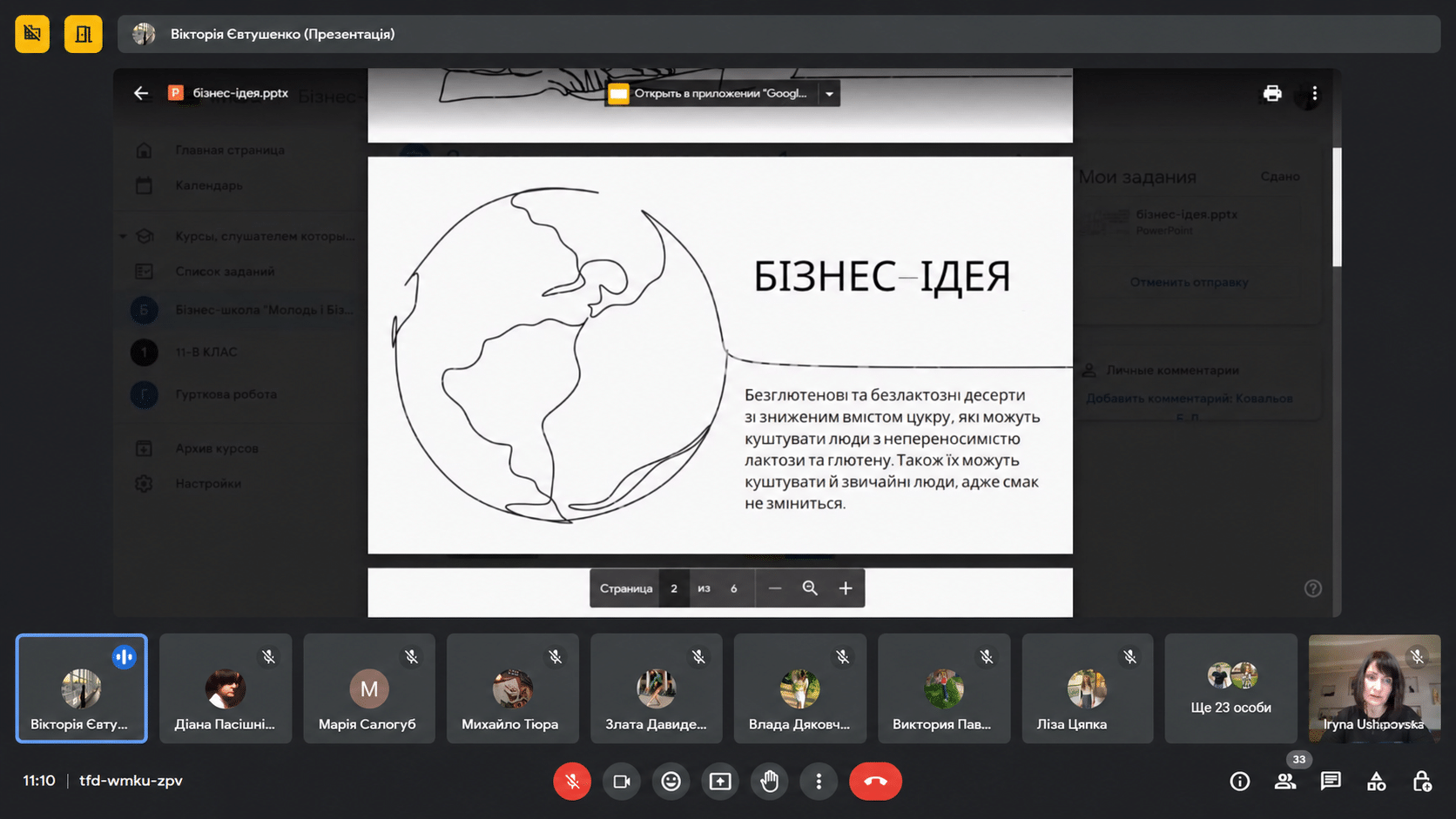
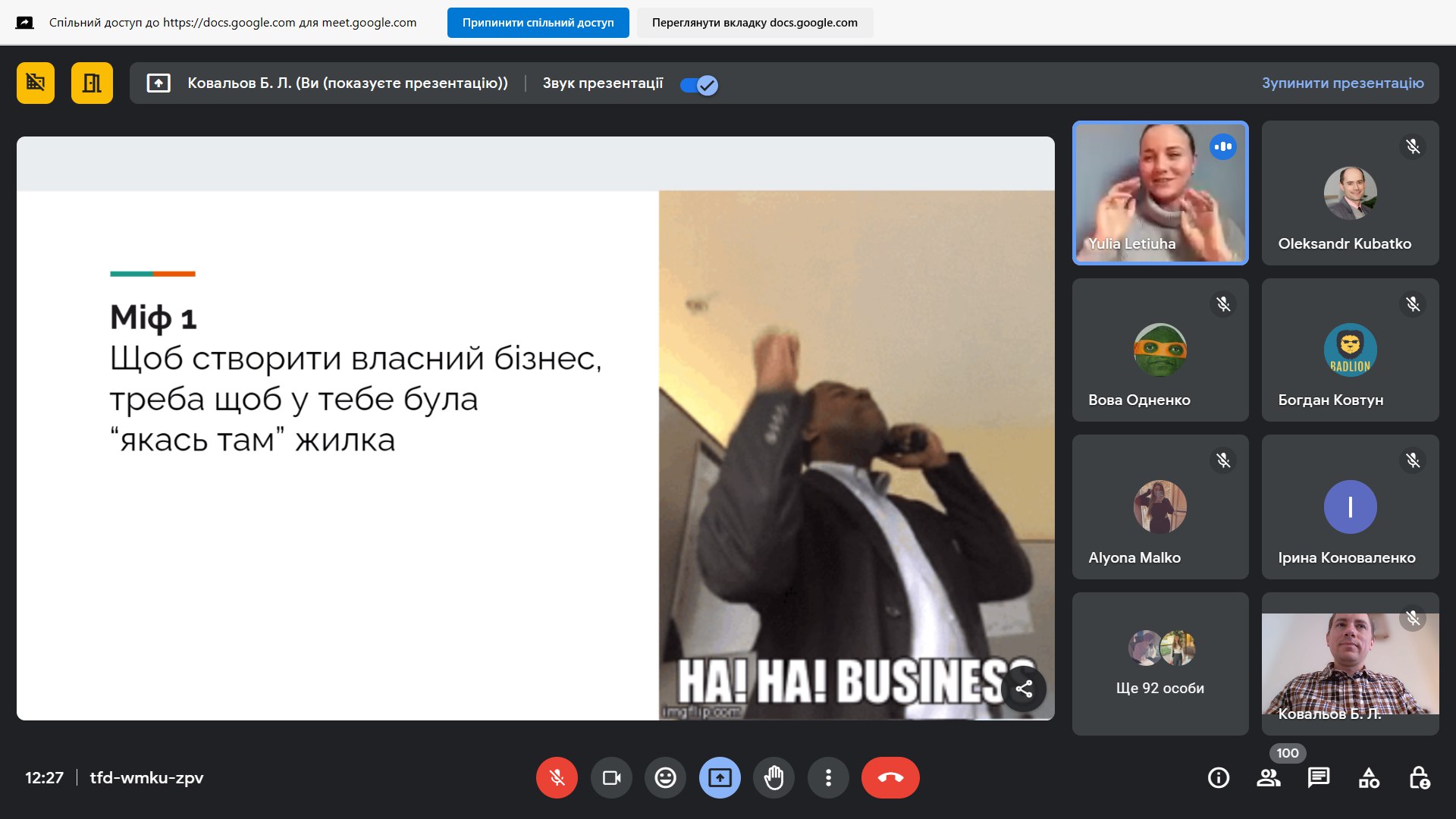
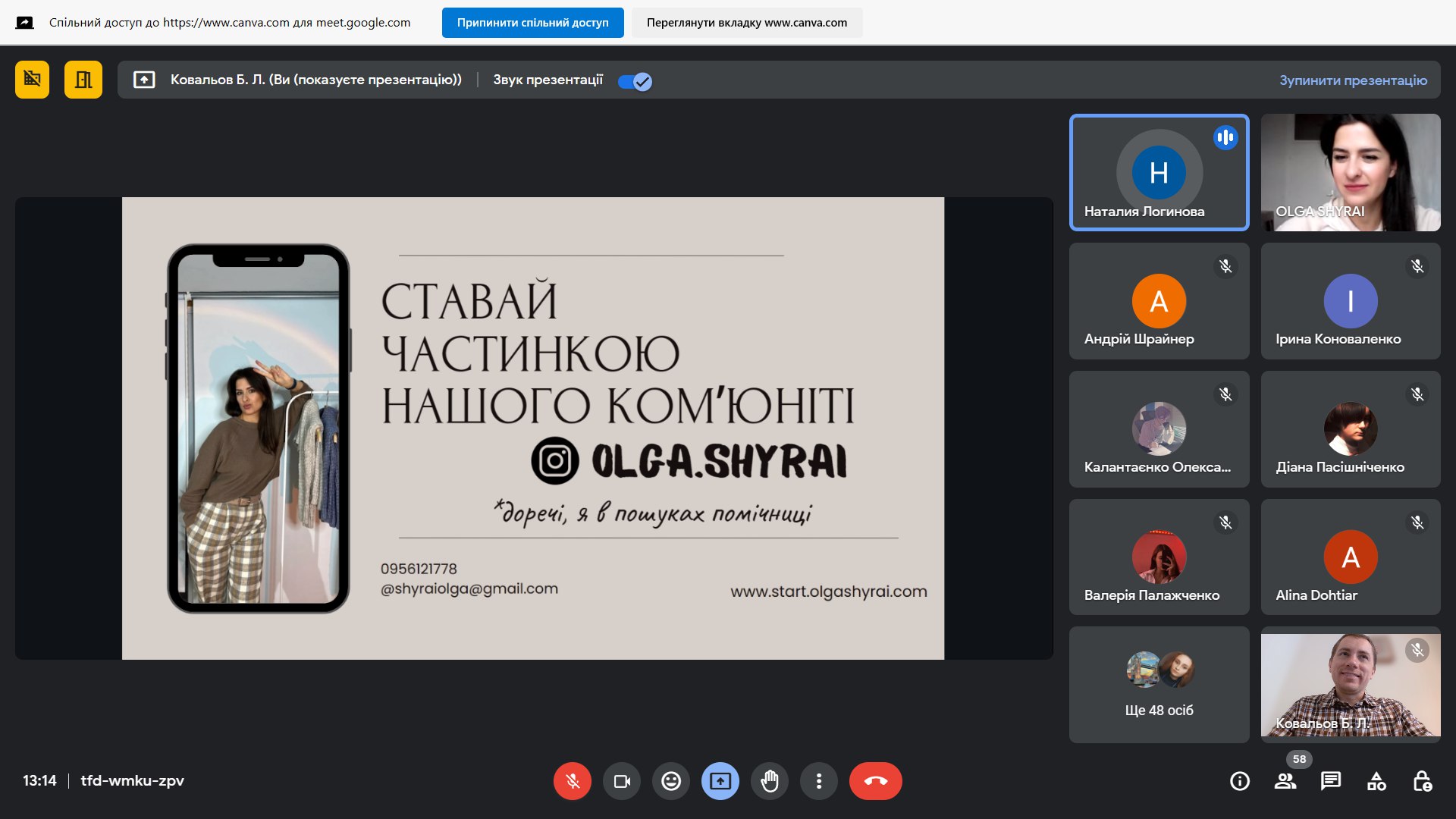
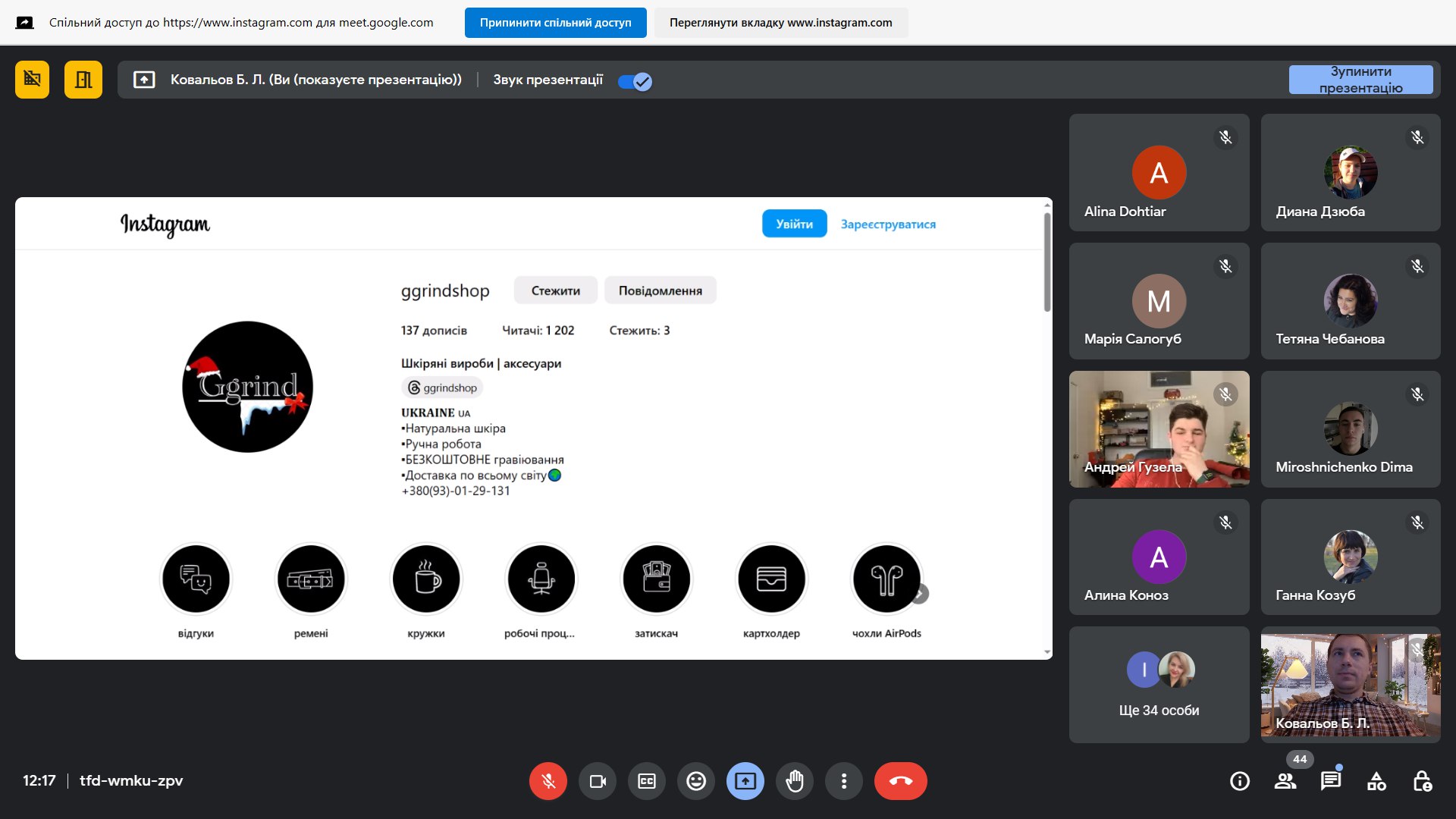
From 2 December 2023 to 12 January 2024, the Winter Business School “Youth & Business: EU and Ukrainian Experience” was held online. The event aimed to provide participants with knowledge of the core principles and values of running a business in the EU and Ukraine and to develop practical entrepreneurial skills.
More than 100 participants took part in the Business School, including university and college students, high school pupils and other young people from Sumy, Odesa, Konotop, Chernihiv, Dnipro, Zaporizhzhia, Bila Tserkva, Kamianets-Podilskyi and other Ukrainian cities.
To facilitate interactive learning, participants were divided into three parallel learning flows following the same five-module programme. Flow 1 was led by Dr Bohdan Kovalov, Flow 2 by Prof. Oleksandr Kubatko, while Flow 3 was co-taught by Dr Iryna Ushchapovska and Vladyslav Piven. In total, 60 teaching hours were delivered by the teaching team. Participants also submitted a practical assignment after each module, with the teaching team providing feedback and academic support.
The educational programme covered the key stages of developing a business idea. Participants explored the fundamentals of entrepreneurship and resources for starting a business; developed business models based on customer segments, value propositions, sales channels, revenue streams, costs and competitive advantages; and learned how to create a minimum viable product (MVP), develop prototypes and validate a product.
Particular attention was paid to entrepreneurship support and access to finance in Ukraine and the European Union. Participants explored the Diia.Business platform, grant and financial-support opportunities available to Ukrainian entrepreneurs, and the Erasmus for Young Entrepreneurs programme as an EU mechanism for international entrepreneurial exchange, learning and business development, including success stories of Ukrainian participants. The programme also addressed organisational and legal forms of entrepreneurship, taxation systems and business registration procedures.
The learning format combined teaching, meetings with entrepreneurs and independent practical assignments. This enabled participants to connect theoretical knowledge with entrepreneurial practice and to compare Ukrainian business-support instruments with relevant EU practices and opportunities. Guest speakers included Ukrainian entrepreneurs with experience of developing businesses in EU countries, particularly Germany and Poland, who shared practical insights into operating and developing a business in the European context.
A strong practical component was integrated throughout the Business School. Participants worked individually and in teams on their own business ideas, analysed customers and competitors, developed value propositions and business models, created MVPs and prototypes, explored opportunities for attracting finance and considered appropriate forms of business registration. The learning process was supported through virtual learning environment (i.e., Google Classroom), where participants completed assignments between the online sessions.
At the final stage of the programme, participants developing their own business projects received mentoring support from entrepreneurs and business experts, enabling them to refine their ideas and strengthen their business models.
The organisers, lecturers and moderators of the Winter Business School were members of the Jean Monnet Module team Dr Bohdan Kovalov, Prof. Oleksandr Kubatko, Dr Iryna Ushchapovska and Vladyslav Piven, teachers and researchers of Sumy State University.
The event took place within the framework of the implementation of the European Commission project – the Jean Monnet Module “Youth & Business: EU Practices for Cooperation” (101126538-YouthBEU-ERASMUS-JMO-2023-HEI-TCH-RSCH).